The Victory of the Stop Alton Gas Campaign: Difference between revisions
No edit summary |
No edit summary |
||
| (5 intermediate revisions by the same user not shown) | |||
| Line 1: | Line 1: | ||
<p>''This article was written by '''Mia Pang''', and is the product of a collaboration between the HUB Librarian (Anglophone) and students in Professor Bonnie McElhinny's fall 2025 course "ANT364: Advocating Climate and Environmental Justice" at the University of Toronto. Many thanks to Mia and Bonnie for their collaboration on this project.''</p> | <p>''This article was written by '''Mia Pang''', and is the product of a collaboration between the HUB Librarian (Anglophone) and students in Professor Bonnie McElhinny's fall 2025 course "ANT364: Advocating Climate and Environmental Justice" at the University of Toronto. Many thanks to Mia and Bonnie for their collaboration on this project.''</p> | ||
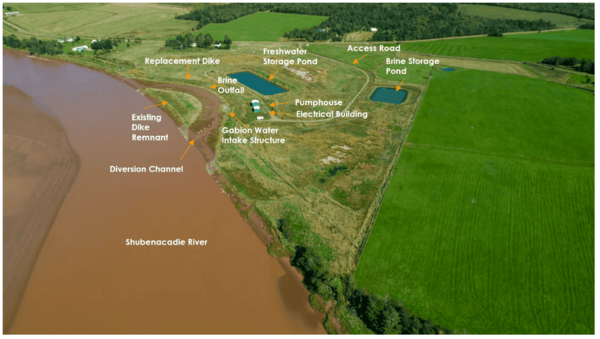
[[File:Altongas1.png|600px|link=https://www.halifaxexaminer.ca/environment/altagas-files-plan-to-decommission-the-alton-gas-site/|thumb|Figure 1.1: Photo & Credit to AltaGas. Aerial view of the Alton Gas project site in Colchester County.]] | |||
=Introduction= | = Introduction = | ||
<p>The Stop Alton Gas Campaign was a Mi’kmaq led, community-supported environmental and social justice movement that happened in Nova Scotia between 2014 to 2021. The campaign came to life in order to fight back against the Alton Natural Gas Storage Project, which would not only have inevitably raised the salt level in the Shubenacadie River to a harmful level, but would also have devastated the Mi’kmaq, whose lives are embodied in the water of the river.</p> | <p>The Stop Alton Gas Campaign was a Mi’kmaq led, community-supported environmental and social justice movement that happened in Nova Scotia between 2014 to 2021. The campaign came to life in order to fight back against the Alton Natural Gas Storage Project, which would not only have inevitably raised the salt level in the Shubenacadie River to a harmful level, but would also have devastated the Mi’kmaq, whose lives are embodied in the water of the river.</p> | ||
<p>The movement ultimately led to the suspension of the Alton Gas project – a battle won after eight years of blockades, treaty truckhouses, and a mix of legal and political action taken by the protesters. While many community members were infuriated with Alton Gas’ plan, the Mi’kmaq stepped into action and became the main actors in the campaign.</p> | <p>The movement ultimately led to the suspension of the Alton Gas project – a battle won after eight years of blockades, treaty truckhouses, and a mix of legal and political action taken by the protesters. While many community members were infuriated with Alton Gas’ plan, the Mi’kmaq stepped into action and became the main actors in the campaign.</p> | ||
=Background to the Campaign= | = Background to the Campaign = | ||
==The Alton Gas Project== | == The Alton Gas Project == | ||
<p>Although the Stop Alton Gas Campaign began in the fall of 2014, Alton Gas had been developing its plans since 2007, when it registered an underground hydrocarbon storage facility for environmental assessment under Part IV of Nova Scotia's Environment Act. On December 18, 2007, the Nova Scotia government granted environmental approval to the project — subject to conditions including monitoring programs, a Community Liaison Committee, and the development of a brine storage pond.<ref>Government of Nova Scotia, “Alton Natural Gas Pipeline Environmental Assessment” https://novascotia.ca/nse/ea/alton-natural-gas-pipeline-project.asp#:~:text=Alton%20Natural%20Gas%20Storage%20LP%20is%20developing%20an%20underground%20natural,as%20a%20Class%20I%20undertaking.</ref></p> | <p>Although the Stop Alton Gas Campaign began in the fall of 2014, Alton Gas had been developing its plans since 2007, when it registered an underground hydrocarbon storage facility for environmental assessment under Part IV of Nova Scotia's Environment Act. On December 18, 2007, the Nova Scotia government granted environmental approval to the project — subject to conditions including monitoring programs, a Community Liaison Committee, and the development of a brine storage pond. <ref>Government of Nova Scotia, “Alton Natural Gas Pipeline Environmental Assessment” https://novascotia.ca/nse/ea/alton-natural-gas-pipeline-project.asp#:~:text=Alton%20Natural%20Gas%20Storage%20LP%20is%20developing%20an%20underground%20natural,as%20a%20Class%20I%20undertaking.</ref> </p> | ||
The project involved the creation of up to 18 massive underground caverns within naturally occurring salt deposits located approximately 1,000 metres below the surface near the Shubenacadie River in Colchester County, Nova Scotia.<ref>Karen Edelstein, “Gas Storage Plan vs. Indigenous Rights in Nova Scotia” ''FracTracker Alliance'', May 20, 2021, https://www.fractracker.org/2021/05/gas-storage-plan-vs-indigenous-rights-in-nova-scotia/#:~:text=Figure%207:%20The%20Treaty%20Truckhouse,for%20%5Bher%5D%20nation.%E2%80%9D</ref> The caverns were designed to store up to 10 billion cubic feet of pressurized methane gas — each roughly the size of an office building — as a high-capacity facility for natural gas, intended to hedge against seasonal energy price swings and to supply stable gas volumes to Nova Scotia, New Brunswick, and the northeastern United States.<ref>Brent Patterson, “Council of Canadians Supports Sipekne’katik Defence of the Shubenacadie River” The Council of Canadians, January 22, 2016, https://canadians.org/analysis/council-canadians-supports-sipeknekatik-defence-shubenacadie-river/</ref> | The project involved the creation of up to 18 massive underground caverns within naturally occurring salt deposits located approximately 1,000 metres below the surface near the Shubenacadie River in Colchester County, Nova Scotia. <ref>Karen Edelstein, “Gas Storage Plan vs. Indigenous Rights in Nova Scotia” ''FracTracker Alliance'', May 20, 2021, https://www.fractracker.org/2021/05/gas-storage-plan-vs-indigenous-rights-in-nova-scotia/#:~:text=Figure%207:%20The%20Treaty%20Truckhouse,for%20%5Bher%5D%20nation.%E2%80%9D</ref> The caverns were designed to store up to 10 billion cubic feet of pressurized methane gas — each roughly the size of an office building — as a high-capacity facility for natural gas, intended to hedge against seasonal energy price swings and to supply stable gas volumes to Nova Scotia, New Brunswick, and the northeastern United States. <ref>Brent Patterson, “Council of Canadians Supports Sipekne’katik Defence of the Shubenacadie River” The Council of Canadians, January 22, 2016, https://canadians.org/analysis/council-canadians-supports-sipeknekatik-defence-shubenacadie-river/</ref> | ||
== Why it was controversial == | |||
==Why it was controversial== | |||
<p>The project generated significant controversy because of the proposed process for creating the underground caverns, which involved dissolving and discharging vast underground salt deposits. This process posed two distinct but interrelated threats:</p> | <p>The project generated significant controversy because of the proposed process for creating the underground caverns, which involved dissolving and discharging vast underground salt deposits. This process posed two distinct but interrelated threats:</p> | ||
#'''Ecological Risk''': | #'''Ecological Risk''': | ||
##Creating the caverns required pumping an initially estimated 10,000 cubic metres of water per day from the Shubenacadie River to a site 12 kilometres inland, in order to dissolve the subterranean salt.<ref> Ecology Action Centre, “EAC Solidarity Statement on the Alton Natural Gas Storage Project” ''Ecology Action Centre'', September 1, 2016, https://ecologyaction.ca/resources-media/position-statements/eac-solidarity-statement-alton-natural-gas-storage-project#:~:text=Creating%20these%20caverns%20produces%20a,the%20river%20system%20every%20day.</ref> | ##Creating the caverns required pumping an initially estimated 10,000 cubic metres of water per day from the Shubenacadie River to a site 12 kilometres inland, in order to dissolve the subterranean salt. <ref> Ecology Action Centre, “EAC Solidarity Statement on the Alton Natural Gas Storage Project” ''Ecology Action Centre'', September 1, 2016, https://ecologyaction.ca/resources-media/position-statements/eac-solidarity-statement-alton-natural-gas-storage-project#:~:text=Creating%20these%20caverns%20produces%20a,the%20river%20system%20every%20day.</ref> | ||
##The resulting waste brine — carrying a salt concentration of 260 parts per thousand (more than seven times the salinity of healthy seawater) — would then be discharged back into the Shubenacadie River estuary.<ref>The resulting waste brine — carrying a salt concentration of 260 parts per thousand (more than seven times the salinity of healthy seawater) — would then be discharged back into the Shubenacadie River estuary.</ref><ref>Edelstein et al., “Gas Storage Plan vs. Indigenous Rights in Nova Scotia.”</ref> | ##The resulting waste brine — carrying a salt concentration of 260 parts per thousand (more than seven times the salinity of healthy seawater) — would then be discharged back into the Shubenacadie River estuary. <ref>The resulting waste brine — carrying a salt concentration of 260 parts per thousand (more than seven times the salinity of healthy seawater) — would then be discharged back into the Shubenacadie River estuary.</ref> <ref>Edelstein et al., “Gas Storage Plan vs. Indigenous Rights in Nova Scotia.”</ref> | ||
##The Shubenacadie River is a crucial spawning ground for the endangered striped bass and Atlantic salmon. While Alton Gas proposed diluting the brine to 28 parts per thousand before discharge, studies showed that striped bass eggs and larvae survive best at concentrations between 0 and 20 parts per thousand.<ref>Dalhousie University Faculty of Agriculture, “Alton Fish Research Program Findings,” January 24, 2017, https://www.dal.ca/faculty/agriculture/news-events/news/2017/01/24/alton_fish_research_program_findings.html</ref> | ##The Shubenacadie River is a crucial spawning ground for the endangered striped bass and Atlantic salmon. While Alton Gas proposed diluting the brine to 28 parts per thousand before discharge, studies showed that striped bass eggs and larvae survive best at concentrations between 0 and 20 parts per thousand. <ref>Dalhousie University Faculty of Agriculture, “Alton Fish Research Program Findings,” January 24, 2017, https://www.dal.ca/faculty/agriculture/news-events/news/2017/01/24/alton_fish_research_program_findings.html</ref> | ||
##Once salinity exceeds this threshold, the survival rate of these species drops by approximately 23% — placing the local fishery at significant risk.<ref>Jake Hubley, “The Alton Gas Project: An Analysis" Treaty Truck House Against Alton Gas, https://treatytruckhouseagainstaltongas.wordpress.com/2016/10/19/the-alton-gas-project-an-analysis/</ref> | ##Once salinity exceeds this threshold, the survival rate of these species drops by approximately 23% — placing the local fishery at significant risk. <ref>Jake Hubley, “The Alton Gas Project: An Analysis" Treaty Truck House Against Alton Gas, https://treatytruckhouseagainstaltongas.wordpress.com/2016/10/19/the-alton-gas-project-an-analysis/</ref> | ||
#'''Infrastructure Risk''': | #'''Infrastructure Risk''': | ||
##Activists and organizations such as the Council of Canadians pointed to a 65% failure rate for underground salt cavern storage facilities in the United States, and a 40% failure rate globally.<ref>Ibid.</ref><ref> Patterson, “Council of Canadians Supports.”</ref> | ##Activists and organizations such as the Council of Canadians pointed to a 65% failure rate for underground salt cavern storage facilities in the United States, and a 40% failure rate globally. <ref>Ibid.</ref> <ref> Patterson, “Council of Canadians Supports.”</ref> | ||
##Such failures can result in uncontrollable methane leaks, contamination of local water tables, and possible explosions.<ref>Ibid.</ref><ref>Hubley, “The Alton Gas Project: An Analysis.”</ref> | ##Such failures can result in uncontrollable methane leaks, contamination of local water tables, and possible explosions. <ref>Ibid.</ref> <ref>Hubley, “The Alton Gas Project: An Analysis.”</ref> | ||
=Key actors= | = Key actors = | ||
==The campaign and its supporters== | == The campaign and its supporters == | ||
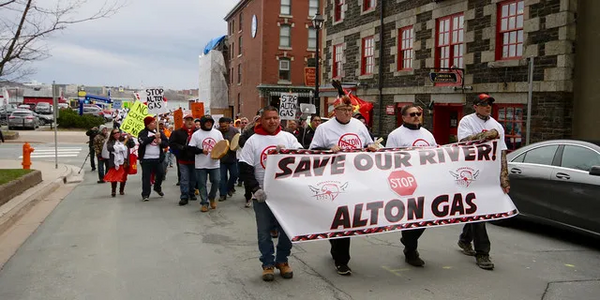
<p>The Stop Alton Gas campaign was a loose network of Mi'kmaq rights holders, settler allies, and environmental organizations, rather than a single formal coalition. The name “Stop Alton Gas” functioned as a campaign banner used by the key actors.</p> | <p>The Stop Alton Gas campaign was a loose network of Mi'kmaq rights holders, settler allies, and environmental organizations, rather than a single formal coalition. The name “Stop Alton Gas” functioned as a campaign banner used by the key actors.</p> | ||
[[File:Altongas2.png|600px|link=https://canadians.org/media/indigenous-leaders-and-allies-unite-stop-alton-gas-project/|center|thumb|Figure 1.2: Credit to Council of Canadians website. Shows campaigners for Stop Alton Gas Campaign.]] | |||
{| class="wikitable" style="border-collapse: collapse; width: 100%; height: 92px; background-color: #ffffff;" | {| class="wikitable" style="border-collapse: collapse; width: 100%; height: 92px; background-color: #ffffff;" | ||
|- style="height: 23px;" | |- style="height: 23px;" | ||
| Line 31: | Line 29: | ||
'''Grassroots Grandmothers''' | '''Grassroots Grandmothers''' | ||
| style="width: 80.3024%; height: 23px;" | | | style="width: 80.3024%; height: 23px;" | | ||
A group of Mi'kmaq women — including leaders Dorene Bernard and Michelle Paul — who provided spiritual and moral leadership for the campaign. They viewed protection of the Shubenacadie River as a sacred duty, leading direct actions such as water walks and maintaining a permanent protest camp. They were primary targets of legal injunctions and remained on the land until the project's end.<ref> Edelstein et al., “Gas Storage Plan vs. Indigenous Rights in Nova Scotia.”</ref><ref>Hayley Ryan, “Alton Gas project cancelled after years of opposition” ''CBC News'', October 22, 2021, https://www.cbc.ca/news/canada/nova-scotia/alton-gas-project-cancelled-after-years-of-opposition-1.6221165</ref> | A group of Mi'kmaq women — including leaders Dorene Bernard and Michelle Paul — who provided spiritual and moral leadership for the campaign. They viewed protection of the Shubenacadie River as a sacred duty, leading direct actions such as water walks and maintaining a permanent protest camp. They were primary targets of legal injunctions and remained on the land until the project's end. <ref> Edelstein et al., “Gas Storage Plan vs. Indigenous Rights in Nova Scotia.”</ref> <ref>Hayley Ryan, “Alton Gas project cancelled after years of opposition” ''CBC News'', October 22, 2021, https://www.cbc.ca/news/canada/nova-scotia/alton-gas-project-cancelled-after-years-of-opposition-1.6221165</ref> | ||
|- style="height: 23px;" | |- style="height: 23px;" | ||
| style="width: 19.6976%; height: 23px; background-color: #99e1d9;" | | | style="width: 19.6976%; height: 23px; background-color: #99e1d9;" | | ||
'''Sipekne’katik First Nation''' | '''Sipekne’katik First Nation''' | ||
| style="width: 80.3024%; height: 23px;" | | | style="width: 80.3024%; height: 23px;" | | ||
As the second-largest Mi'kmaw community in Nova Scotia, they led the legal and political fight against the project. Leaders including Cheryl Maloney and District War Chief Jim Maloney challenged the Crown's failure to consult on a nation-to-nation basis. They launched multiple successful legal challenges in the Supreme Court of Nova Scotia that proved decisive in stalling the project.<ref>Edelstein et al., “Gas Storage Plan vs. Indigenous Rights in Nova Scotia.”</ref><ref>Patterson, “Council of Canadians Supports Sipekne’katik Defence of the Shubenacadie River.”</ref><ref>Hubley, “The Alton Gas Project: An Analysis.”</ref> | As the second-largest Mi'kmaw community in Nova Scotia, they led the legal and political fight against the project. Leaders including Cheryl Maloney and District War Chief Jim Maloney challenged the Crown's failure to consult on a nation-to-nation basis. They launched multiple successful legal challenges in the Supreme Court of Nova Scotia that proved decisive in stalling the project. <ref>Edelstein et al., “Gas Storage Plan vs. Indigenous Rights in Nova Scotia.”</ref> <ref>Patterson, “Council of Canadians Supports Sipekne’katik Defence of the Shubenacadie River.”</ref> <ref>Hubley, “The Alton Gas Project: An Analysis.”</ref> | ||
|- style="height: 23px;" | |- style="height: 23px;" | ||
| style="width: 19.6976%; height: 23px; background-color: #99e1d9;" | | | style="width: 19.6976%; height: 23px; background-color: #99e1d9;" | | ||
'''Millbrook First Nation''' | '''Millbrook First Nation''' | ||
| style="width: 80.3024%; height: 23px;" | | | style="width: 80.3024%; height: 23px;" | | ||
Along with Sipekne'katik, this nation was distinct from the Mi'kmaq Rights Initiative (KMKNO) regarding the project. They asserted they did not receive adequate consultation and were not represented by the government's claimed consultation process.<ref>Hubley, “The Alton Gas Project: An Analysis.”</ref> | Along with Sipekne'katik, this nation was distinct from the Mi'kmaq Rights Initiative (KMKNO) regarding the project. They asserted they did not receive adequate consultation and were not represented by the government's claimed consultation process. <ref>Hubley, “The Alton Gas Project: An Analysis.”</ref> | ||
|- style="height: 23px;" | |- style="height: 23px;" | ||
| style="width: 19.6976%; height: 23px; background-color: #99e1d9;" | | | style="width: 19.6976%; height: 23px; background-color: #99e1d9;" | | ||
'''Local Community Supporters''' | '''Local Community Supporters''' | ||
| style="width: 80.3024%; height: 23px;" | | | style="width: 80.3024%; height: 23px;" | | ||
Included non-Indigenous residents from Alton and Brentwood, as well as white fishers concerned about river health. Working in collaboration with Mi'kmaq leaders, they helped frame the campaign as a Nova Scotian water-rights issue rather than solely an Indigenous one.<ref>Alex Birrell, “That’s How We Protect One Another” Briarpatch Magazine, September 17, 2021, https://briarpatchmagazine.com/articles/view/alton-gas-resistance-mikmaq-settler-solidarity</ref> | Included non-Indigenous residents from Alton and Brentwood, as well as white fishers concerned about river health. Working in collaboration with Mi'kmaq leaders, they helped frame the campaign as a Nova Scotian water-rights issue rather than solely an Indigenous one. <ref>Alex Birrell, “That’s How We Protect One Another” Briarpatch Magazine, September 17, 2021, https://briarpatchmagazine.com/articles/view/alton-gas-resistance-mikmaq-settler-solidarity</ref> | ||
|- style="height: 23px;" | |- style="height: 23px;" | ||
| style="width: 19.6976%; height: 23px; background-color: #99e1d9;" | | | style="width: 19.6976%; height: 23px; background-color: #99e1d9;" | | ||
'''Non-Governmental Organizations''' | '''Non-Governmental Organizations''' | ||
| style="width: 80.3024%; height: 23px;" | | | style="width: 80.3024%; height: 23px;" | | ||
The Council of Canadians provided advocacy, organizational support, and framing of the project as a threat to climate goals.<ref>Patterson, “Council of Canadians Supports Sipekne’katik Defence of the Shubenacadie River.”</ref> The Ecology Action Centre stood in solidarity with Mi'kmaq rights holders and filed legal appeals against the project's permits.<ref>Ecology Action Centre, “EAC Solidarity Statement.”</ref> Solidarity with Alton Gas Resistance focused on fundraising and educating settler allies on how to support the resistance while respecting Mi'kmaq sovereignty.<ref>Birrell, “That’s How We Protect One Another.”</ref> | The Council of Canadians provided advocacy, organizational support, and framing of the project as a threat to climate goals. <ref>Patterson, “Council of Canadians Supports Sipekne’katik Defence of the Shubenacadie River.”</ref> The Ecology Action Centre stood in solidarity with Mi'kmaq rights holders and filed legal appeals against the project's permits. <ref>Ecology Action Centre, “EAC Solidarity Statement.”</ref> Solidarity with Alton Gas Resistance focused on fundraising and educating settler allies on how to support the resistance while respecting Mi'kmaq sovereignty. <ref>Birrell, “That’s How We Protect One Another.”</ref> | ||
|} | |} | ||
==Alton Gas and the Government== | == Alton Gas and the Government == | ||
{| class="wikitable" style="border-collapse: collapse; width: 100%; height: 92px; background-color: #ffffff;" | {| class="wikitable" style="border-collapse: collapse; width: 100%; height: 92px; background-color: #ffffff;" | ||
|- style="height: 23px;" | |- style="height: 23px;" | ||
| Line 60: | Line 58: | ||
'''Alton Natural Gas Storage LP''' | '''Alton Natural Gas Storage LP''' | ||
| style="width: 80.3024%; height: 23px;" | | | style="width: 80.3024%; height: 23px;" | | ||
A subsidiary of AltaGas Ltd., the company proposed developing an underground natural gas storage facility.<ref> Government of Nova Scotia, “Alton Natural Gas Pipeline Environmental Assessment.”</ref> | A subsidiary of AltaGas Ltd., the company proposed developing an underground natural gas storage facility. <ref> Government of Nova Scotia, “Alton Natural Gas Pipeline Environmental Assessment.”</ref> | ||
|- style="height: 23px;" | |- style="height: 23px;" | ||
| style="width: 19.6976%; height: 23px; background-color: #99e1d9;" | | | style="width: 19.6976%; height: 23px; background-color: #99e1d9;" | | ||
'''Nova Scotia Provincial Government''' | '''Nova Scotia Provincial Government''' | ||
| style="width: 80.3024%; height: 23px;" | | | style="width: 80.3024%; height: 23px;" | | ||
The Nova Scotia provincial government was responsible for granting critical environmental and industrial permits and ensuring the constitutional duty to consult with Mi’kmaq communities was fulfilled. Key political figures involved included former Premier Stephen McNeil and former Environment Minister Margaret Miller. The provincial government was generally supportive of Alton Gas’ project, seeing it as a way to stabilize natural gas prices and encourage industry.<ref>Ibid.</ref> | The Nova Scotia provincial government was responsible for granting critical environmental and industrial permits and ensuring the constitutional duty to consult with Mi’kmaq communities was fulfilled. Key political figures involved included former Premier Stephen McNeil and former Environment Minister Margaret Miller. The provincial government was generally supportive of Alton Gas’ project, seeing it as a way to stabilize natural gas prices and encourage industry. <ref>Ibid.</ref> | ||
|- style="height: 23px;" | |- style="height: 23px;" | ||
| style="width: 19.6976%; height: 23px; background-color: #99e1d9;" | | | style="width: 19.6976%; height: 23px; background-color: #99e1d9;" | | ||
'''Canadian Federal Government''' | '''Canadian Federal Government''' | ||
| style="width: 80.3024%; height: 23px;" | | | style="width: 80.3024%; height: 23px;" | | ||
The federal government’s primary responsibilities included protecting fish habitat through the Department of Fisheries and Oceans (DFO) and regulating the discharge of deleterious substances under the Fisheries Act via Environment and Climate Change Canada (ECCC).<ref>“Mi’kmaq Groups Protest $100M Alton Gas Storage Project,” ''CBC News'', September 29, 2014, https://www.cbc.ca/news/canada/nova-scotia/mi-kmaq-groups-protest-100m-alton-gas-storage-project-1.2780922</ref> The most prominent federal figure was then-Prime Minister Justin Trudeau, who faced public suspicion from activists that he was attempting to alter regulations to benefit Alton Gas rather than protect the water.<ref>Edelstein et al., “Gas Storage Plan vs. Indigenous Rights in Nova Scotia.”</ref> Initially, the federal position was seen as a regulatory breakdown providing tacit approval for brine disposal, but this shifted in 2019 when the government proposed a regulatory fix within the Fisheries.<ref>Birrell, “That’s How We Protect One Another.”</ref> | The federal government’s primary responsibilities included protecting fish habitat through the Department of Fisheries and Oceans (DFO) and regulating the discharge of deleterious substances under the Fisheries Act via Environment and Climate Change Canada (ECCC). <ref>“Mi’kmaq Groups Protest $100M Alton Gas Storage Project,” ''CBC News'', September 29, 2014, https://www.cbc.ca/news/canada/nova-scotia/mi-kmaq-groups-protest-100m-alton-gas-storage-project-1.2780922</ref> The most prominent federal figure was then-Prime Minister Justin Trudeau, who faced public suspicion from activists that he was attempting to alter regulations to benefit Alton Gas rather than protect the water. <ref>Edelstein et al., “Gas Storage Plan vs. Indigenous Rights in Nova Scotia.”</ref> Initially, the federal position was seen as a regulatory breakdown providing tacit approval for brine disposal, but this shifted in 2019 when the government proposed a regulatory fix within the Fisheries. <ref>Birrell, “That’s How We Protect One Another.”</ref> | ||
|- style="height: 23px;" | |- style="height: 23px;" | ||
| style="width: 19.6976%; height: 23px; background-color: #99e1d9;" | | | style="width: 19.6976%; height: 23px; background-color: #99e1d9;" | | ||
| Line 83: | Line 81: | ||
|} | |} | ||
=Campaign Timeline= | = Campaign Timeline = | ||
{| class="wikitable" style="border-collapse: collapse; width: 100%; height: 92px; background-color: #ffffff;" | {| class="wikitable" style="border-collapse: collapse; width: 100%; height: 92px; background-color: #ffffff;" | ||
| Line 90: | Line 88: | ||
'''2007''' | '''2007''' | ||
| style="width: 80.3024%; height: 23px;" | | | style="width: 80.3024%; height: 23px;" | | ||
July 6: Alton Gas registers an underground hydrocarbon storage facility project for environmental assessment under Part IV of Nova Scotia's Environment Act.<ref>Government of Nova Scotia, “Alton Natural Gas Pipeline Environmental Assessment.”</ref> | July 6: Alton Gas registers an underground hydrocarbon storage facility project for environmental assessment under Part IV of Nova Scotia's Environment Act. <ref>Government of Nova Scotia, “Alton Natural Gas Pipeline Environmental Assessment.”</ref> | ||
November 23: Alton Gas submitted supplemental information addressing concerns related to fish and fish habitat, as well as information demonstrating how First Nation concerns had been considered in the development and operation of their proposed project.<ref>Ibid.</ref> | November 23: Alton Gas submitted supplemental information addressing concerns related to fish and fish habitat, as well as information demonstrating how First Nation concerns had been considered in the development and operation of their proposed project. <ref>Ibid.</ref> | ||
December 18: The Nova Scotia government granted environmental approval to Alton Gas to start their project – a proposed $130 million undertaking to create up to 18 massive underground caverns within naturally occurring salt deposits located 1,000 meters beneath the surface near the Shubenacadie River. Several conditions followed this approval: obtaining all necessary permits, development of a brine storage pond, a Community Liaison Committee, and specific monitoring programs. Alton Gas expected to start work for the salt caverns in the years 2014/2015.<ref>Ibid.</ref> | December 18: The Nova Scotia government granted environmental approval to Alton Gas to start their project – a proposed $130 million undertaking to create up to 18 massive underground caverns within naturally occurring salt deposits located 1,000 meters beneath the surface near the Shubenacadie River. Several conditions followed this approval: obtaining all necessary permits, development of a brine storage pond, a Community Liaison Committee, and specific monitoring programs. Alton Gas expected to start work for the salt caverns in the years 2014/2015. <ref>Ibid.</ref> | ||
|- style="height: 23px;" | |- style="height: 23px;" | ||
| style="width: 19.6976%; height: 23px; background-color: #99e1d9;" | | | style="width: 19.6976%; height: 23px; background-color: #99e1d9;" | | ||
| Line 102: | Line 100: | ||
'''2016''' | '''2016''' | ||
| style="width: 80.3024%; height: 23px;" | | | style="width: 80.3024%; height: 23px;" | | ||
January: The Nova Scotia government gave approval and permits to Alton Gas to continue with the halted project.<ref>Hubley, “The Alton Gas Project: An Analysis.”</ref> Seeing that the issue lay not only with the corporation but with the government, the campaign shifted strategy to include legal fights against the provincial government. | January: The Nova Scotia government gave approval and permits to Alton Gas to continue with the halted project. <ref>Hubley, “The Alton Gas Project: An Analysis.”</ref> Seeing that the issue lay not only with the corporation but with the government, the campaign shifted strategy to include legal fights against the provincial government. | ||
February: The Ecology Action Centre, Sipekne’katik, and Millbrook First Nations submitted appeals against the Nova Scotia province’s decision to approve the operational permits.<ref>Ecology Action Centre, “EAC Solidarity Statement.”</ref> | February: The Ecology Action Centre, Sipekne’katik, and Millbrook First Nations submitted appeals against the Nova Scotia province’s decision to approve the operational permits. <ref>Ecology Action Centre, “EAC Solidarity Statement.”</ref> | ||
April: Sipekne’katik also launched a legal challenge at the Supreme Court of Nova Scotia based on the Crown’s failure to consult.<ref>Council of Canadians, “Indigenous Leaders and Allies Unite to Stop Alton Gas Project” The Council of Canadians, March 28, 2017. https://canadians.org/media/indigenous-leaders-and-allies-unite-stop-alton-gas-project/#:~:text=The%20speakers%2C%20including%20Sipekne'katik,expansion%20that%20would%20follow%20it</ref> A government lawyer’s argument in court that the Mi’kmaq were not an “unconquered people” sparked public outrage and led to a personal apology from Premier Stephen McNeil – reinforcing the campaign’s moral case against a colonial government. | April: Sipekne’katik also launched a legal challenge at the Supreme Court of Nova Scotia based on the Crown’s failure to consult. <ref>Council of Canadians, “Indigenous Leaders and Allies Unite to Stop Alton Gas Project” The Council of Canadians, March 28, 2017. https://canadians.org/media/indigenous-leaders-and-allies-unite-stop-alton-gas-project/#:~:text=The%20speakers%2C%20including%20Sipekne'katik,expansion%20that%20would%20follow%20it</ref> A government lawyer’s argument in court that the Mi’kmaq were not an “unconquered people” sparked public outrage and led to a personal apology from Premier Stephen McNeil – reinforcing the campaign’s moral case against a colonial government. | ||
Summer: The Treaty Truckhouse was erected by Mi’kmaq near the Shubenacadie River, invoking Clause 4 of the Peace and Friendship Treaty of 1752, which granted the Mi’kmaq the right to build a truckhouse structure along the river for purposes of trade and fishing.<ref>Edelstein et al., “Gas Storage Plan vs. Indigenous Rights in Nova Scotia.”</ref> The structure established a legalized form of physical access and blockade to Alton Gas’ project site. While Alton Gas attempted to serve trespassing notices in cooperation with the RCMP, the treaty legally supported the structure’s presence, and the Mi’kmaq were able to counter these notices using their constitutional treaty right.<ref> Birrell, “That’s How We Protect One Another.”</ref> Because the treaty permits a truckhouse to be situated wherever considered needful, neither the company nor the government had authority to remove it. | Summer: The Treaty Truckhouse was erected by Mi’kmaq near the Shubenacadie River, invoking Clause 4 of the Peace and Friendship Treaty of 1752, which granted the Mi’kmaq the right to build a truckhouse structure along the river for purposes of trade and fishing. <ref>Edelstein et al., “Gas Storage Plan vs. Indigenous Rights in Nova Scotia.”</ref> The structure established a legalized form of physical access and blockade to Alton Gas’ project site. While Alton Gas attempted to serve trespassing notices in cooperation with the RCMP, the treaty legally supported the structure’s presence, and the Mi’kmaq were able to counter these notices using their constitutional treaty right. <ref> Birrell, “That’s How We Protect One Another.”</ref> Because the treaty permits a truckhouse to be situated wherever considered needful, neither the company nor the government had authority to remove it. | ||
|- style="height: 23px;" | |- style="height: 23px;" | ||
| style="width: 19.6976%; height: 23px; background-color: #99e1d9;" | | | style="width: 19.6976%; height: 23px; background-color: #99e1d9;" | | ||
'''2017''' | '''2017''' | ||
| style="width: 80.3024%; height: 23px;" | | | style="width: 80.3024%; height: 23px;" | | ||
January: The Supreme Court of Nova Scotia ruled in favour of the Sipekne’katik First Nation, requiring the province to resume consultations.<ref>Council of Canadians, “Indigenous Leaders and Allies Unite.”</ref> This was a major turning point in the public perception of the project and in the campaign’s legal standing. | January: The Supreme Court of Nova Scotia ruled in favour of the Sipekne’katik First Nation, requiring the province to resume consultations. <ref>Council of Canadians, “Indigenous Leaders and Allies Unite.”</ref> This was a major turning point in the public perception of the project and in the campaign’s legal standing. | ||
May: Protest camps for the campaign grew to include the straw-bale house, adorned with the motto “We Are All Treaty People.”<ref>Edelstein et al., “Gas Storage Plan vs. Indigenous Rights in Nova Scotia.”</ref> The structure became a physical manifestation of the collaboration between Indigenous and settler movements and a foundation for shared treaty obligations and protection. | May: Protest camps for the campaign grew to include the straw-bale house, adorned with the motto “We Are All Treaty People.” <ref>Edelstein et al., “Gas Storage Plan vs. Indigenous Rights in Nova Scotia.”</ref> The structure became a physical manifestation of the collaboration between Indigenous and settler movements and a foundation for shared treaty obligations and protection. | ||
|- style="height: 23px;" | |- style="height: 23px;" | ||
| style="width: 19.6976%; height: 23px; background-color: #99e1d9;" | | | style="width: 19.6976%; height: 23px; background-color: #99e1d9;" | | ||
'''2019''' | '''2019''' | ||
| style="width: 80.3024%; height: 23px;" | | | style="width: 80.3024%; height: 23px;" | | ||
February 22: Alton Gas applied to the Supreme Court of Nova Scotia to have protesters removed from the grounds.<ref>Ryan, “Alton Gas Project Cancelled After Years of Opposition.”</ref> | February 22: Alton Gas applied to the Supreme Court of Nova Scotia to have protesters removed from the grounds. <ref>Ryan, “Alton Gas Project Cancelled After Years of Opposition.”</ref> | ||
February 25: Environment and Climate Change Canada (ECCC) issued a notice of intent to create new regulations under the Fisheries Act, targeting “deleterious substances” related to brine waste. Activists including Rachael Greenland-Smith and Dale Poulette had used freedom of information requests to prove that Alton Gas had submitted unreliable salinity data to regulators, paving the way for this federal action. Prior to this change, the Fisheries Act could not be used to support the protest, and Alton Gas had been successfully applying to have protesters removed from the grounds.<ref> Birrell, “That’s How We Protect One Another.”</ref><ref> Taryn Grant, “Residents Raise Concerns about High Salinity of Brine from Alton Gas Project,” ''CBC News'', April 15, 2019, https://www.cbc.ca/news/canada/nova-scotia/alton-gas-brine-salinity-fish-1.5095913.</ref><ref> Robin Tress, “Alton Gas Would Violate Fisheries Act, Feds Custom-Tailoring Regulations to Benefit Corporate Interests,” The Council of Canadians, February 11, 2020, https://canadians.org/analysis/alton-gas-would-violate-fisheries-act-feds-custom-tailoring-regulations-benefit-corporate/.</ref> | February 25: Environment and Climate Change Canada (ECCC) issued a notice of intent to create new regulations under the Fisheries Act, targeting “deleterious substances” related to brine waste. Activists including Rachael Greenland-Smith and Dale Poulette had used freedom of information requests to prove that Alton Gas had submitted unreliable salinity data to regulators, paving the way for this federal action. Prior to this change, the Fisheries Act could not be used to support the protest, and Alton Gas had been successfully applying to have protesters removed from the grounds. <ref> Birrell, “That’s How We Protect One Another.”</ref> <ref> Taryn Grant, “Residents Raise Concerns about High Salinity of Brine from Alton Gas Project,” ''CBC News'', April 15, 2019, https://www.cbc.ca/news/canada/nova-scotia/alton-gas-brine-salinity-fish-1.5095913.</ref> <ref> Robin Tress, “Alton Gas Would Violate Fisheries Act, Feds Custom-Tailoring Regulations to Benefit Corporate Interests,” The Council of Canadians, February 11, 2020, https://canadians.org/analysis/alton-gas-would-violate-fisheries-act-feds-custom-tailoring-regulations-benefit-corporate/.</ref> | ||
March 12: Alton Gas called for an injunction hearing in an attempt to remove Mi’kmaq rights holders from the project work site.<ref> Ecology Action Centre, “EAC Solidarity Statement.”</ref> | March 12: Alton Gas called for an injunction hearing in an attempt to remove Mi’kmaq rights holders from the project work site. <ref> Ecology Action Centre, “EAC Solidarity Statement.”</ref> | ||
April 10: The Royal Canadian Mounted Police enforced the injunction at the project site, leading to the arrest of protesters including Grandmother Kukuwis Wowkis.<ref>Ryan, “Alton Gas Project Cancelled After Years of Opposition.”</ref> Alton Gas subsequently bulldozed and destroyed the straw-bale house.<ref>Birrell, “That’s How We Protect One Another.”</ref> Despite the setback, the movement remained undeterred. | April 10: The Royal Canadian Mounted Police enforced the injunction at the project site, leading to the arrest of protesters including Grandmother Kukuwis Wowkis. <ref>Ryan, “Alton Gas Project Cancelled After Years of Opposition.”</ref> Alton Gas subsequently bulldozed and destroyed the straw-bale house. <ref>Birrell, “That’s How We Protect One Another.”</ref> Despite the setback, the movement remained undeterred. | ||
|- style="height: 23px;" | |- style="height: 23px;" | ||
| style="width: 19.6976%; height: 23px; background-color: #99e1d9;" | | | style="width: 19.6976%; height: 23px; background-color: #99e1d9;" | | ||
'''2020''' | '''2020''' | ||
| style="width: 80.3024%; height: 23px;" | | | style="width: 80.3024%; height: 23px;" | | ||
March: The Supreme Court of Nova Scotia ruled that Environment Minister Margaret Miller had been wrong to conclude that adequate consultation had occurred.<ref>Ryan, “Alton Gas Project Cancelled After Years of Opposition.”</ref><ref>Taryn Grant, “Siding with First Nation, N.S. Judge Overturns Alton Gas Approval,” ''CBC News'', March 25, 2020, https://www.cbc.ca/news/canada/nova-scotia/alton-gas-nova-scotia-supreme-court-appeal-decision-1.5508130.</ref> The court ordered the province to resume consultations with the Sipekne’katik Nation, and Alton Gas was subsequently forced to pause the project due to the suspension of its industrial approval. | March: The Supreme Court of Nova Scotia ruled that Environment Minister Margaret Miller had been wrong to conclude that adequate consultation had occurred. <ref>Ryan, “Alton Gas Project Cancelled After Years of Opposition.”</ref> <ref>Taryn Grant, “Siding with First Nation, N.S. Judge Overturns Alton Gas Approval,” ''CBC News'', March 25, 2020, https://www.cbc.ca/news/canada/nova-scotia/alton-gas-nova-scotia-supreme-court-appeal-decision-1.5508130.</ref> The court ordered the province to resume consultations with the Sipekne’katik Nation, and Alton Gas was subsequently forced to pause the project due to the suspension of its industrial approval. | ||
|- style="height: 23px;" | |- style="height: 23px;" | ||
| style="width: 19.6976%; height: 23px; background-color: #99e1d9;" | | | style="width: 19.6976%; height: 23px; background-color: #99e1d9;" | | ||
'''2021''' | '''2021''' | ||
| style="width: 80.3024%; height: 23px;" | | | style="width: 80.3024%; height: 23px;" | | ||
May 22–30: The Mi’kmaki Water Walk 2021 took place, a 114 km walk spanning from Dartmouth to Maitland – travelling along the Shubenacadie Canal system, Shubenacadie Grand Lake, and the Shubenacadie River system. The walk was held to pray for the healing of the water and to honour the responsibility to protect Mother Earth and carry the footsteps of Indigenous ancestors.<ref>Edelstein et al., “Gas Storage Plan vs. Indigenous Rights in Nova Scotia.”</ref> | May 22–30: The Mi’kmaki Water Walk 2021 took place, a 114 km walk spanning from Dartmouth to Maitland – travelling along the Shubenacadie Canal system, Shubenacadie Grand Lake, and the Shubenacadie River system. The walk was held to pray for the healing of the water and to honour the responsibility to protect Mother Earth and carry the footsteps of Indigenous ancestors. <ref>Edelstein et al., “Gas Storage Plan vs. Indigenous Rights in Nova Scotia.”</ref> | ||
June: Grassroots Grandmothers were preparing for a court date regarding the Alton Gas injunction for trespass, continuing their unwavering presence at the heart of the campaign.<ref>Ibid.</ref> | June: Grassroots Grandmothers were preparing for a court date regarding the Alton Gas injunction for trespass, continuing their unwavering presence at the heart of the campaign. <ref>Ibid.</ref> | ||
October 22: Official cancellation of the Alton Gas project. While AltaGas and the Nova Scotia government officially framed the decommissioning as a business decision based on challenging project economics, it is evident that the Stop Alton Gas Campaign created those failing economics – years of delays, regulatory uncertainty, and a damaged public image forced the company’s hand.<ref>Ryan, “Alton Gas Project Cancelled After Years of Opposition.”</ref> Discussions with federal and provincial regulators, the Mi’kmaq, and other interested parties began regarding the next steps for decommissioning the project site.<ref>Ibid.</ref><ref>Edelstein et al., “Gas Storage Plan vs. Indigenous Rights in Nova Scotia.”</ref> The Treaty Truckhouse remains standing as a sacred place of education and a permanent reminder of the resistance.<ref>Lindsay Jones, “The Indigenous grandmothers who stopped a pipeline” ''Maclean’s'', January 12, 2022, https://macleans.ca/society/the-indigenous-grandmothers-who-stopped-a-pipeline/</ref> | October 22: Official cancellation of the Alton Gas project. While AltaGas and the Nova Scotia government officially framed the decommissioning as a business decision based on challenging project economics, it is evident that the Stop Alton Gas Campaign created those failing economics – years of delays, regulatory uncertainty, and a damaged public image forced the company’s hand. <ref>Ryan, “Alton Gas Project Cancelled After Years of Opposition.”</ref> Discussions with federal and provincial regulators, the Mi’kmaq, and other interested parties began regarding the next steps for decommissioning the project site. <ref>Ibid.</ref> <ref>Edelstein et al., “Gas Storage Plan vs. Indigenous Rights in Nova Scotia.”</ref> The Treaty Truckhouse remains standing as a sacred place of education and a permanent reminder of the resistance. <ref>Lindsay Jones, “The Indigenous grandmothers who stopped a pipeline” ''Maclean’s'', January 12, 2022, https://macleans.ca/society/the-indigenous-grandmothers-who-stopped-a-pipeline/</ref> | ||
|- style="height: 23px;" | |- style="height: 23px;" | ||
| style="width: 19.6976%; height: 23px; background-color: #99e1d9;" | | | style="width: 19.6976%; height: 23px; background-color: #99e1d9;" | | ||
'''2024''' | '''2024''' | ||
| style="width: 80.3024%; height: 23px;" | | | style="width: 80.3024%; height: 23px;" | | ||
January: ECCC discontinues development of the proposed Fisheries Act regulations, likely because the Alton Gas project had been decommissioned.<ref>Edelstein et al., “Gas Storage Plan vs. Indigenous Rights in Nova Scotia.”</ref> | January: ECCC discontinues development of the proposed Fisheries Act regulations, likely because the Alton Gas project had been decommissioned. <ref>Edelstein et al., “Gas Storage Plan vs. Indigenous Rights in Nova Scotia.”</ref> | ||
|} | |} | ||
=Analysis of Strategy and Tactics= | = Analysis of Strategy and Tactics = | ||
<p>The cancellation of the Alton Gas project in October 2021 was the product of several interlocking strategies that accumulated pressure over eight years. Understanding why the project ended when it did — and not earlier — requires examining which tactics proved most decisive.</p> | <p>The cancellation of the Alton Gas project in October 2021 was the product of several interlocking strategies that accumulated pressure over eight years. Understanding why the project ended when it did — and not earlier — requires examining which tactics proved most decisive.</p> | ||
==Legal and regulatory debilitation== | == Legal and regulatory debilitation == | ||
<p>The most structurally impactful strategy was the campaign's use of the Canadian legal system to create a regulatory bottleneck that rendered the project economically toxic. The Sipekne'katik First Nation's legal challenges — particularly the assertion that the Crown had failed in its duty to consult a sovereign nation — were not merely symbolic. The January 2017 Supreme Court ruling halted project momentum at a critical juncture, and the March 2020 ruling suspended industrial approval entirely, requiring consultations to restart from scratch.</p> | <p>The most structurally impactful strategy was the campaign's use of the Canadian legal system to create a regulatory bottleneck that rendered the project economically toxic. The Sipekne'katik First Nation's legal challenges — particularly the assertion that the Crown had failed in its duty to consult a sovereign nation — were not merely symbolic. The January 2017 Supreme Court ruling halted project momentum at a critical juncture, and the March 2020 ruling suspended industrial approval entirely, requiring consultations to restart from scratch.</p> | ||
<p>The provincial government's own conduct worsened its legal position: when government lawyer Alex Cameron argued that the Mi'kmaq were not an 'unconquered people,' the ensuing public outrage and Premier McNeil's apology simultaneously strengthened the campaign's moral authority and undermined the Crown's credibility in consultation proceedings.</p> | <p>The provincial government's own conduct worsened its legal position: when government lawyer Alex Cameron argued that the Mi'kmaq were not an 'unconquered people,' the ensuing public outrage and Premier McNeil's apology simultaneously strengthened the campaign's moral authority and undermined the Crown's credibility in consultation proceedings.</p> | ||
[[File:Altongas3.png|450px|link=https://www.facebook.com/photo.php?fbid=103522498482635&set=pb.100077443142236.-2207520000&type=3|right|thumb|Figure 1.3: Credit to Mi'kmaki Water Walk 2021 Facebook page, March 11, 2021. Shows participants of the Water Walk.]] | |||
<p>On the federal level, activists Rachael Greenland-Smith and Dale Poulette used freedom-of-information requests to expose a 2016 ECCC toxicology report confirming that the undiluted brine Alton Gas planned to deposit in the Shubenacadie River would be classified as a “deleterious substance” under the Fisheries Act – a classification the company and the provincial government had not publicly disclosed. This evidence led ECCC to issue a notice of intent on February 25, 2019, making this the first time Fisheries Act regulations had been drafted to specifically permit a single project rather than govern an entire industrial activity. Prior to this, the Fisheries Act was historically punitive rather than preventative; government officials at both levels had told campaigners that they could only intervene after the brine had already been deposited into the river.</p> | <p>On the federal level, activists Rachael Greenland-Smith and Dale Poulette used freedom-of-information requests to expose a 2016 ECCC toxicology report confirming that the undiluted brine Alton Gas planned to deposit in the Shubenacadie River would be classified as a “deleterious substance” under the Fisheries Act – a classification the company and the provincial government had not publicly disclosed. This evidence led ECCC to issue a notice of intent on February 25, 2019, making this the first time Fisheries Act regulations had been drafted to specifically permit a single project rather than govern an entire industrial activity. Prior to this, the Fisheries Act was historically punitive rather than preventative; government officials at both levels had told campaigners that they could only intervene after the brine had already been deposited into the river.</p> | ||
<p>Together, these legal interventions created years of delays and uncertainty. By 2021, the cumulative cost of litigation, repeated consultation requirements, and regulatory unpredictability had made the project fiscally untenable — the real meaning behind AltaGas' reference to 'challenging project economics.'</p> | <p>Together, these legal interventions created years of delays and uncertainty. By 2021, the cumulative cost of litigation, repeated consultation requirements, and regulatory unpredictability had made the project fiscally untenable — the real meaning behind AltaGas' reference to 'challenging project economics.'</p> | ||
==Strategic assertion of treaty sovereignty== | == Strategic assertion of treaty sovereignty == | ||
<p>The Peace and Friendship Treaty of 1752 — and particularly Clause 4, which explicitly granted the Mi'kmaq the right to build a truckhouse along the Shubenacadie River — transformed the campaign from an environmental protest into a constitutional and nation-to-nation dispute. This reframing had profound strategic consequences.</p> | <p>The Peace and Friendship Treaty of 1752 — and particularly Clause 4, which explicitly granted the Mi'kmaq the right to build a truckhouse along the Shubenacadie River — transformed the campaign from an environmental protest into a constitutional and nation-to-nation dispute. This reframing had profound strategic consequences.</p> | ||
<p>The Treaty Truckhouse, built in summer 2016 near the channel Alton Gas had already constructed for brine disposal, was not merely a protest structure: it was a legally defensible exercise of treaty rights that quickly became the hub of the Stop Alton Gas movement. When Alton Gas attempted to serve trespassing notices with RCMP cooperation, campaigners used the treaty clause to establish a constitutional right to occupy the site and monitor corporate activity. Because the treaty permits a truckhouse to be located wherever 'needful,' neither the company nor the government had clear authority to remove it.</p> | <p>The Treaty Truckhouse, built in summer 2016 near the channel Alton Gas had already constructed for brine disposal, was not merely a protest structure: it was a legally defensible exercise of treaty rights that quickly became the hub of the Stop Alton Gas movement. When Alton Gas attempted to serve trespassing notices with RCMP cooperation, campaigners used the treaty clause to establish a constitutional right to occupy the site and monitor corporate activity. Because the treaty permits a truckhouse to be located wherever 'needful,' neither the company nor the government had clear authority to remove it.</p> | ||
<p>By invoking the treaties to assert unceded sovereignty, the campaign also shifted the legal burden: it was no longer the protesters who had to justify their presence, but the Crown that had to justify its failure to seek full and informed Mi'kmaq consent rather than a perfunctory consultation process. Cheryl Maloney argued that a project of this scale required the full consent of the Mi’kmaq nation and not merely the consultation with the Mi’kmaq Rights Initiative (KMKNO) that the government had fulfilled instead. | <p>By invoking the treaties to assert unceded sovereignty, the campaign also shifted the legal burden: it was no longer the protesters who had to justify their presence, but the Crown that had to justify its failure to seek full and informed Mi'kmaq consent rather than a perfunctory consultation process. Cheryl Maloney argued that a project of this scale required the full consent of the Mi’kmaq nation and not merely the consultation with the Mi’kmaq Rights Initiative (KMKNO) that the government had fulfilled instead.The campaign also leveraged the logic that the treaties were the legal foundation for all settlers living in Mi’kma’ki, growing a sense of shared responsibility, this being expressed concretely in the motto “We Are All Treaty People” painted on the straw-bale house.</p> | ||
The campaign also leveraged the logic that the treaties were the legal foundation for all settlers living in Mi’kma’ki, growing a sense of shared responsibility, this being expressed concretely in the motto “We Are All Treaty People” painted on the straw-bale house.</p> | |||
==Tactical allyship and control of public narrative== | == Tactical allyship and control of public narrative == | ||
<p>A strategically distinctive feature of the campaign was how it managed the relationship between Indigenous and settler participants during their collaboration. Robin Tress, a campaigner with the Council of Canadians, observed that while the two movements had prior overlap, the Stop Alton Gas Campaign caused them to collide in a far more extreme fashion.</p> | <p>A strategically distinctive feature of the campaign was how it managed the relationship between Indigenous and settler participants during their collaboration. Robin Tress, a campaigner with the Council of Canadians, observed that while the two movements had prior overlap, the Stop Alton Gas Campaign caused them to collide in a far more extreme fashion.</p> | ||
<p>Cheryl Maloney deliberately deployed settler privilege as a communications tool. Recognizing that media coverage often dismissed environmental protests as “Indigenous issues,” she directed white settler allies to organize their own campaign activities — news releases, car caravans, and designated spokespeople who were not visibly Indigenous — under Indigenous leadership and direction.</p> | <p>Cheryl Maloney deliberately deployed settler privilege as a communications tool. Recognizing that media coverage often dismissed environmental protests as “Indigenous issues,” she directed white settler allies to organize their own campaign activities — news releases, car caravans, and designated spokespeople who were not visibly Indigenous — under Indigenous leadership and direction.</p> | ||
| Line 165: | Line 163: | ||
<p>The arrests of Grassroots Grandmothers and the bulldozing of the straw-bale house in 2019 backfired for Alton Gas: rather than quelling resistance, they generated media coverage that was deeply damaging to AltaGas' public image and added further momentum to the campaign.</p> | <p>The arrests of Grassroots Grandmothers and the bulldozing of the straw-bale house in 2019 backfired for Alton Gas: rather than quelling resistance, they generated media coverage that was deeply damaging to AltaGas' public image and added further momentum to the campaign.</p> | ||
==Spiritual and cultural grounding== | == Spiritual and cultural grounding == | ||
<p>Throughout the campaign, the Grassroots Grandmothers gave the campaign moral authority and emotional sustainability that legal strategy alone could not provide. By framing the Shubenacadie River as a 'sacred highway' and an irreplaceable source of life — and by treating women as the carriers and protectors of water — the movement embedded itself in responsibilities that could not be bought off or intimidated away.</p> | <p>Throughout the campaign, the Grassroots Grandmothers gave the campaign moral authority and emotional sustainability that legal strategy alone could not provide. By framing the Shubenacadie River as a 'sacred highway' and an irreplaceable source of life — and by treating women as the carriers and protectors of water — the movement embedded itself in responsibilities that could not be bought off or intimidated away.</p> | ||
<p>In October 2014, a sacred fire was lit on the highway near the project site, signalling the root of the resistance in colonial duties ot the land and the ancestors buried along the riverbanks. The 114 km Water Walk in May 2021, spanning from Dartmouth to Maitland along the Shubenacadie Canal system and River, was held to pray for the healing of the water and to honour the responsibility to carry the footsteps of Indigenous Ancestors. Water protectors also stood on the banks and made offerings through song before leaving the water.</p> | <p>In October 2014, a sacred fire was lit on the highway near the project site, signalling the root of the resistance in colonial duties ot the land and the ancestors buried along the riverbanks. The 114 km Water Walk in May 2021, spanning from Dartmouth to Maitland along the Shubenacadie Canal system and River, was held to pray for the healing of the water and to honour the responsibility to carry the footsteps of Indigenous Ancestors. Water protectors also stood on the banks and made offerings through song before leaving the water.</p> | ||
<p>The spiritual grounding through these forms of resistance ensured that the movement could not be bought or intimidated, as it was about more than the legal or territorial dimensions – it was about the Shubenacadie River itself and the sacred duty to protect the water. Physical structures like the permanent camp and the Truckhouse served as places of education where settlers could learn their rights and responsibilities as treaty people living on unceded Mi’kmaw territory, strengthening the identity behind the campaign.</p> | <p>The spiritual grounding through these forms of resistance ensured that the movement could not be bought or intimidated, as it was about more than the legal or territorial dimensions – it was about the Shubenacadie River itself and the sacred duty to protect the water. Physical structures like the permanent camp and the Truckhouse served as places of education where settlers could learn their rights and responsibilities as treaty people living on unceded Mi’kmaw territory, strengthening the identity behind the campaign.</p> | ||
==What was most decisive, and when?== | == What was most decisive, and when? == | ||
<p>The project was not cancelled after the first legal victory in 2017 because Alton Gas retained regulatory approvals and investor backing. It was not cancelled after the 2019 arrests because AltaGas still believed it could overcome opposition through legal force. The decisive turning point was the March 2020 Supreme Court ruling that suspended industrial approval entirely, which — coming after more than a decade of delay, multiple failed consultations, the severe reputational damage from the arrests of Grassroots Grandmothers and the bulldozing of the straw-bale house, and a growing regulatory burden under the Fisheries Act — made further investment unsustainable. The campaign's legal strategy was the proximate cause; the spiritual, cultural, and allyship dimensions were what sustained it long enough for that legal strategy to work.</p> | <p>The project was not cancelled after the first legal victory in 2017 because Alton Gas retained regulatory approvals and investor backing. It was not cancelled after the 2019 arrests because AltaGas still believed it could overcome opposition through legal force. The decisive turning point was the March 2020 Supreme Court ruling that suspended industrial approval entirely, which — coming after more than a decade of delay, multiple failed consultations, the severe reputational damage from the arrests of Grassroots Grandmothers and the bulldozing of the straw-bale house, and a growing regulatory burden under the Fisheries Act — made further investment unsustainable. The campaign's legal strategy was the proximate cause; the spiritual, cultural, and allyship dimensions were what sustained it long enough for that legal strategy to work.</p> | ||
=Key Takeaways= | = Key Takeaways = | ||
*'''Legal and regulatory debilitation can be decisive, even when slow'''. Each court ruling, permit appeal, and regulatory gap identified by the campaign added to a cumulative burden of delay, uncertainty, and cost that ultimately made the project economically untenable. | *'''Legal and regulatory debilitation can be decisive, even when slow'''. Each court ruling, permit appeal, and regulatory gap identified by the campaign added to a cumulative burden of delay, uncertainty, and cost that ultimately made the project economically untenable. | ||
*'''A strategic assertion of treaty sovereignty can transform the entire frame of a conflict'''. By moving from environmental protest to constitutional dispute, the campaign gave itself tools — truckhouse rights, duty-to-consult doctrine, unceded sovereignty — that a straightforward environmental objection would not have had. | *'''A strategic assertion of treaty sovereignty can transform the entire frame of a conflict'''. By moving from environmental protest to constitutional dispute, the campaign gave itself tools — truckhouse rights, duty-to-consult doctrine, unceded sovereignty — that a straightforward environmental objection would not have had. | ||
| Line 179: | Line 177: | ||
*'''Spiritual and cultural grounding provides stamina and moral authority that legal strategies cannot replace'''. The movement's deep roots in sacred responsibility to the water made it impossible to buy off, and gave it the emotional endurance to sustain resistance across eight years of setbacks. | *'''Spiritual and cultural grounding provides stamina and moral authority that legal strategies cannot replace'''. The movement's deep roots in sacred responsibility to the water made it impossible to buy off, and gave it the emotional endurance to sustain resistance across eight years of setbacks. | ||
=References= | = Bibliography = | ||
<p>Birrell, Alex. “‘That’s How We Protect One Another.’” Briarpatch Magazine. Accessed January 7, 2026. https://briarpatchmagazine.com/articles/view/alton-gas-resistance-mikmaq-settler-solidarity.</p> | |||
<p>CBC News. “Alton Gas Brine Salinity Could Harm Fish, Critics Say.” April 15, 2019. https://www.cbc.ca/news/canada/nova-scotia/alton-gas-brine-salinity-fish-1.5095913.</p> | |||
<p>CBC News. “Mi’kmaq Groups Protest $100M Alton Gas Storage Project.” September 29, 2014. https://www.cbc.ca/news/canada/nova-scotia/mi-kmaq-groups-protest-100m-alton-gas-storage-project-1.2780922.</p> | |||
<p>Council of Canadians. “Indigenous Leaders and Allies Unite to Stop Alton Gas Project.” The Council of Canadians, June 8, 2022. https://canadians.org/media/indigenous-leaders-and-allies-unite-stop-alton-gas-project/#:~:text=The%20speakers%2C%20including%20Sipekne’katik,expansion%20that%20would%20follow%20it.</p> | |||
<p>Ecology Action Centre “EAC Solidarity Statement on the Alton Natural Gas Storage Project.” EAC Solidarity Statement on the Alton Natural Gas Storage Project | Ecology Action Centre. https://ecologyaction.ca/resources-media/position-statements/eac-solidarity-statement-alton-natural-gas-storage-project#:~:text=Creating%20these%20caverns%20produces%20a,the%20river%20system%20every%20day.</p> | |||
<p>Edelstein, Karen, FracTracker Alliance, Erica Jackson, Kyle Ferrar, Guest Author, Karen Edelstein, and Shannon Smith. “Gas Storage Plan vs. Indigenous Rights in Nova Scotia.” FracTracker Alliance, January 10, 2022. https://www.fractracker.org/2021/05/gas-storage-plan-vs-indigenous-rights-in-nova-scotia/#:~:text=Figure%207:%20The%20Treaty%20Truckhouse,for%20%5Bher%5D%20nation.%E2%80%9D.</p> | |||
<p>Government of Nova Scotia“Alton Natural Gas Pipeline: Environmental Assessment.” Alton Natural Gas Pipeline | Environmental Assessment. Accessed January 6, 2026. https://novascotia.ca/nse/ea/alton-natural-gas-pipeline-project.asp#:~:text=Alton%20Natural%20Gas%20Storage%20LP%20is%20developing%20an%20underground%20natural,as%20a%20Class%20I%20undertaking.</p> | |||
<p>Grant, Taryn. “Siding with First Nation, N.S. Judge Overturns Alton Gas Approval.” CBC News. March 24, 2020. https://www.cbc.ca/news/canada/nova-scotia/alton-gas-nova-scotia-supreme-court-appeal-decision-1.5508130.</p> | |||
<p>Henderson, Jennifer. “Court Hears Sipekne’katik Appeal of Alton Gas Decision.” Halifax Examiner. February 19, 2020. https://www.halifaxexaminer.ca/government/province-house/court-hears-sipeknekatik-appeal-of-alton-gas-decision/.</p> | |||
<p>Hubley, Jake. “The Alton Gas Project: An Analysis.” Treaty Truck House Against Alton Gas, March 31, 2016. https://treatytruckhouseagainstaltongas.wordpress.com/2016/10/19/the-alton-gas-project-an-analysis/.</p> | |||
<p>Jones, Lindsay. “The Indigenous Grandmothers Who Stopped a Pipeline - Macleans.Ca.” Mclean’s. Accessed January 7, 2026. https://www.macleans.ca/society/environment/the-indigenous-grandmothers-who-stopped-a-pipeline/.</p> | |||
<p>MacDonald, Michael. “Slow-Motion Showdown Continues on Banks of Shubenacadie River | CBC News.” CBCnews, August 5, 2018. https://www.cbc.ca/news/canada/nova-scotia/shubenacadie-river-showdown-alton-natural-gas-storage-lp-1.4774889#:~:text=$130M%20project%20largely%20on,work%20site%20northwest%20of%20Stewiacke.&text=%22We’re%20not%20going%20to,Never.%22.</p> | |||
<p>Page, Elliot, and Ian Daniels, dirs. There’s Something in the Water. Giant Pictures, 2020.</p> | |||
<p>Patterson, Brent. “Council of Canadians Supports Sipekne’katik Defence of the Shubenacadie River.” The Council of Canadians, June 8, 2022. https://canadians.org/analysis/council-canadians-supports-sipeknekatik-defence-shubenacadie-river/.</p> | |||
<p>Tress, Robin. “Alton Gas Would Violate Fisheries Act, Feds Custom-Tailoring Regulations to Benefit Corporate Interests.” The Council of Canadians, February 11, 2020. https://canadians.org/analysis/alton-gas-would-violate-fisheries-act-feds-custom-tailoring-regulations-benefit-corporate/.</p> | |||
<p>Tress, Robin. Online interview with Mia Pang, zoom call, December 8, 2025.</p> | |||
Ryan, Hayley. “Alton Gas Project Cancelled after Years of Opposition | CBC News.” CBCnews, October 22, 2021. https://www.cbc.ca/news/canada/nova-scotia/alton-gas-project-cancelled-after-years-of-opposition-1.6221165. | |||
= References = | |||
Latest revision as of 14:05, 29 April 2026
This article was written by Mia Pang, and is the product of a collaboration between the HUB Librarian (Anglophone) and students in Professor Bonnie McElhinny's fall 2025 course "ANT364: Advocating Climate and Environmental Justice" at the University of Toronto. Many thanks to Mia and Bonnie for their collaboration on this project.
Introduction
The Stop Alton Gas Campaign was a Mi’kmaq led, community-supported environmental and social justice movement that happened in Nova Scotia between 2014 to 2021. The campaign came to life in order to fight back against the Alton Natural Gas Storage Project, which would not only have inevitably raised the salt level in the Shubenacadie River to a harmful level, but would also have devastated the Mi’kmaq, whose lives are embodied in the water of the river.
The movement ultimately led to the suspension of the Alton Gas project – a battle won after eight years of blockades, treaty truckhouses, and a mix of legal and political action taken by the protesters. While many community members were infuriated with Alton Gas’ plan, the Mi’kmaq stepped into action and became the main actors in the campaign.
Background to the Campaign
The Alton Gas Project
Although the Stop Alton Gas Campaign began in the fall of 2014, Alton Gas had been developing its plans since 2007, when it registered an underground hydrocarbon storage facility for environmental assessment under Part IV of Nova Scotia's Environment Act. On December 18, 2007, the Nova Scotia government granted environmental approval to the project — subject to conditions including monitoring programs, a Community Liaison Committee, and the development of a brine storage pond. [1]
The project involved the creation of up to 18 massive underground caverns within naturally occurring salt deposits located approximately 1,000 metres below the surface near the Shubenacadie River in Colchester County, Nova Scotia. [2] The caverns were designed to store up to 10 billion cubic feet of pressurized methane gas — each roughly the size of an office building — as a high-capacity facility for natural gas, intended to hedge against seasonal energy price swings and to supply stable gas volumes to Nova Scotia, New Brunswick, and the northeastern United States. [3]
Why it was controversial
The project generated significant controversy because of the proposed process for creating the underground caverns, which involved dissolving and discharging vast underground salt deposits. This process posed two distinct but interrelated threats:
- Ecological Risk:
- Creating the caverns required pumping an initially estimated 10,000 cubic metres of water per day from the Shubenacadie River to a site 12 kilometres inland, in order to dissolve the subterranean salt. [4]
- The resulting waste brine — carrying a salt concentration of 260 parts per thousand (more than seven times the salinity of healthy seawater) — would then be discharged back into the Shubenacadie River estuary. [5] [6]
- The Shubenacadie River is a crucial spawning ground for the endangered striped bass and Atlantic salmon. While Alton Gas proposed diluting the brine to 28 parts per thousand before discharge, studies showed that striped bass eggs and larvae survive best at concentrations between 0 and 20 parts per thousand. [7]
- Once salinity exceeds this threshold, the survival rate of these species drops by approximately 23% — placing the local fishery at significant risk. [8]
- Infrastructure Risk:
- Activists and organizations such as the Council of Canadians pointed to a 65% failure rate for underground salt cavern storage facilities in the United States, and a 40% failure rate globally. [9] [10]
- Such failures can result in uncontrollable methane leaks, contamination of local water tables, and possible explosions. [11] [12]
Key actors
The campaign and its supporters
The Stop Alton Gas campaign was a loose network of Mi'kmaq rights holders, settler allies, and environmental organizations, rather than a single formal coalition. The name “Stop Alton Gas” functioned as a campaign banner used by the key actors.
|
Grassroots Grandmothers |
A group of Mi'kmaq women — including leaders Dorene Bernard and Michelle Paul — who provided spiritual and moral leadership for the campaign. They viewed protection of the Shubenacadie River as a sacred duty, leading direct actions such as water walks and maintaining a permanent protest camp. They were primary targets of legal injunctions and remained on the land until the project's end. [13] [14] |
|
Sipekne’katik First Nation |
As the second-largest Mi'kmaw community in Nova Scotia, they led the legal and political fight against the project. Leaders including Cheryl Maloney and District War Chief Jim Maloney challenged the Crown's failure to consult on a nation-to-nation basis. They launched multiple successful legal challenges in the Supreme Court of Nova Scotia that proved decisive in stalling the project. [15] [16] [17] |
|
Millbrook First Nation |
Along with Sipekne'katik, this nation was distinct from the Mi'kmaq Rights Initiative (KMKNO) regarding the project. They asserted they did not receive adequate consultation and were not represented by the government's claimed consultation process. [18] |
|
Local Community Supporters |
Included non-Indigenous residents from Alton and Brentwood, as well as white fishers concerned about river health. Working in collaboration with Mi'kmaq leaders, they helped frame the campaign as a Nova Scotian water-rights issue rather than solely an Indigenous one. [19] |
|
Non-Governmental Organizations |
The Council of Canadians provided advocacy, organizational support, and framing of the project as a threat to climate goals. [20] The Ecology Action Centre stood in solidarity with Mi'kmaq rights holders and filed legal appeals against the project's permits. [21] Solidarity with Alton Gas Resistance focused on fundraising and educating settler allies on how to support the resistance while respecting Mi'kmaq sovereignty. [22] |
Alton Gas and the Government
|
Alton Natural Gas Storage LP |
A subsidiary of AltaGas Ltd., the company proposed developing an underground natural gas storage facility. [23] |
|
Nova Scotia Provincial Government |
The Nova Scotia provincial government was responsible for granting critical environmental and industrial permits and ensuring the constitutional duty to consult with Mi’kmaq communities was fulfilled. Key political figures involved included former Premier Stephen McNeil and former Environment Minister Margaret Miller. The provincial government was generally supportive of Alton Gas’ project, seeing it as a way to stabilize natural gas prices and encourage industry. [24] |
|
Canadian Federal Government |
The federal government’s primary responsibilities included protecting fish habitat through the Department of Fisheries and Oceans (DFO) and regulating the discharge of deleterious substances under the Fisheries Act via Environment and Climate Change Canada (ECCC). [25] The most prominent federal figure was then-Prime Minister Justin Trudeau, who faced public suspicion from activists that he was attempting to alter regulations to benefit Alton Gas rather than protect the water. [26] Initially, the federal position was seen as a regulatory breakdown providing tacit approval for brine disposal, but this shifted in 2019 when the government proposed a regulatory fix within the Fisheries. [27] |
|
Royal Canadian Mounted Police (RCMP) |
The physical manifestation of Alton Gas’ and the government's will to accomplish the project. |
|
Supreme Court of Nova Scotia |
Served as the primary arena for the campaign's legal victories. |
Campaign Timeline
|
2007 |
July 6: Alton Gas registers an underground hydrocarbon storage facility project for environmental assessment under Part IV of Nova Scotia's Environment Act. [28] November 23: Alton Gas submitted supplemental information addressing concerns related to fish and fish habitat, as well as information demonstrating how First Nation concerns had been considered in the development and operation of their proposed project. [29] December 18: The Nova Scotia government granted environmental approval to Alton Gas to start their project – a proposed $130 million undertaking to create up to 18 massive underground caverns within naturally occurring salt deposits located 1,000 meters beneath the surface near the Shubenacadie River. Several conditions followed this approval: obtaining all necessary permits, development of a brine storage pond, a Community Liaison Committee, and specific monitoring programs. Alton Gas expected to start work for the salt caverns in the years 2014/2015. [30] |
|
2014 |
Fall: Development of a brine discharge pipeline started next to the Shubenacadie River. The project would have required pumping 10,000 cubic metres of water per day from the river to dissolve underground salt deposits, discharging the resulting brine – at a salt concentration more than seven times that of seawater – back into the estuary. Local resistance, primarily led by Mi’kmaq community members, and formal First Nation title claims managed to halt the project for about a year. A sacred fire was lit on the highway in October, signalling the rooting of the resistance in Indigenous duties to the land and to the ancestors buried along the riverbanks. |
|
2016 |
January: The Nova Scotia government gave approval and permits to Alton Gas to continue with the halted project. [31] Seeing that the issue lay not only with the corporation but with the government, the campaign shifted strategy to include legal fights against the provincial government. February: The Ecology Action Centre, Sipekne’katik, and Millbrook First Nations submitted appeals against the Nova Scotia province’s decision to approve the operational permits. [32] April: Sipekne’katik also launched a legal challenge at the Supreme Court of Nova Scotia based on the Crown’s failure to consult. [33] A government lawyer’s argument in court that the Mi’kmaq were not an “unconquered people” sparked public outrage and led to a personal apology from Premier Stephen McNeil – reinforcing the campaign’s moral case against a colonial government. Summer: The Treaty Truckhouse was erected by Mi’kmaq near the Shubenacadie River, invoking Clause 4 of the Peace and Friendship Treaty of 1752, which granted the Mi’kmaq the right to build a truckhouse structure along the river for purposes of trade and fishing. [34] The structure established a legalized form of physical access and blockade to Alton Gas’ project site. While Alton Gas attempted to serve trespassing notices in cooperation with the RCMP, the treaty legally supported the structure’s presence, and the Mi’kmaq were able to counter these notices using their constitutional treaty right. [35] Because the treaty permits a truckhouse to be situated wherever considered needful, neither the company nor the government had authority to remove it. |
|
2017 |
January: The Supreme Court of Nova Scotia ruled in favour of the Sipekne’katik First Nation, requiring the province to resume consultations. [36] This was a major turning point in the public perception of the project and in the campaign’s legal standing. May: Protest camps for the campaign grew to include the straw-bale house, adorned with the motto “We Are All Treaty People.” [37] The structure became a physical manifestation of the collaboration between Indigenous and settler movements and a foundation for shared treaty obligations and protection. |
|
2019 |
February 22: Alton Gas applied to the Supreme Court of Nova Scotia to have protesters removed from the grounds. [38] February 25: Environment and Climate Change Canada (ECCC) issued a notice of intent to create new regulations under the Fisheries Act, targeting “deleterious substances” related to brine waste. Activists including Rachael Greenland-Smith and Dale Poulette had used freedom of information requests to prove that Alton Gas had submitted unreliable salinity data to regulators, paving the way for this federal action. Prior to this change, the Fisheries Act could not be used to support the protest, and Alton Gas had been successfully applying to have protesters removed from the grounds. [39] [40] [41] March 12: Alton Gas called for an injunction hearing in an attempt to remove Mi’kmaq rights holders from the project work site. [42] April 10: The Royal Canadian Mounted Police enforced the injunction at the project site, leading to the arrest of protesters including Grandmother Kukuwis Wowkis. [43] Alton Gas subsequently bulldozed and destroyed the straw-bale house. [44] Despite the setback, the movement remained undeterred. |
|
2020 |
March: The Supreme Court of Nova Scotia ruled that Environment Minister Margaret Miller had been wrong to conclude that adequate consultation had occurred. [45] [46] The court ordered the province to resume consultations with the Sipekne’katik Nation, and Alton Gas was subsequently forced to pause the project due to the suspension of its industrial approval. |
|
2021 |
May 22–30: The Mi’kmaki Water Walk 2021 took place, a 114 km walk spanning from Dartmouth to Maitland – travelling along the Shubenacadie Canal system, Shubenacadie Grand Lake, and the Shubenacadie River system. The walk was held to pray for the healing of the water and to honour the responsibility to protect Mother Earth and carry the footsteps of Indigenous ancestors. [47] June: Grassroots Grandmothers were preparing for a court date regarding the Alton Gas injunction for trespass, continuing their unwavering presence at the heart of the campaign. [48] October 22: Official cancellation of the Alton Gas project. While AltaGas and the Nova Scotia government officially framed the decommissioning as a business decision based on challenging project economics, it is evident that the Stop Alton Gas Campaign created those failing economics – years of delays, regulatory uncertainty, and a damaged public image forced the company’s hand. [49] Discussions with federal and provincial regulators, the Mi’kmaq, and other interested parties began regarding the next steps for decommissioning the project site. [50] [51] The Treaty Truckhouse remains standing as a sacred place of education and a permanent reminder of the resistance. [52] |
|
2024 |
January: ECCC discontinues development of the proposed Fisheries Act regulations, likely because the Alton Gas project had been decommissioned. [53] |
Analysis of Strategy and Tactics
The cancellation of the Alton Gas project in October 2021 was the product of several interlocking strategies that accumulated pressure over eight years. Understanding why the project ended when it did — and not earlier — requires examining which tactics proved most decisive.
Legal and regulatory debilitation
The most structurally impactful strategy was the campaign's use of the Canadian legal system to create a regulatory bottleneck that rendered the project economically toxic. The Sipekne'katik First Nation's legal challenges — particularly the assertion that the Crown had failed in its duty to consult a sovereign nation — were not merely symbolic. The January 2017 Supreme Court ruling halted project momentum at a critical juncture, and the March 2020 ruling suspended industrial approval entirely, requiring consultations to restart from scratch.
The provincial government's own conduct worsened its legal position: when government lawyer Alex Cameron argued that the Mi'kmaq were not an 'unconquered people,' the ensuing public outrage and Premier McNeil's apology simultaneously strengthened the campaign's moral authority and undermined the Crown's credibility in consultation proceedings.
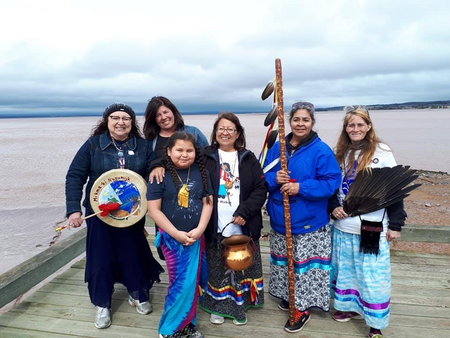
On the federal level, activists Rachael Greenland-Smith and Dale Poulette used freedom-of-information requests to expose a 2016 ECCC toxicology report confirming that the undiluted brine Alton Gas planned to deposit in the Shubenacadie River would be classified as a “deleterious substance” under the Fisheries Act – a classification the company and the provincial government had not publicly disclosed. This evidence led ECCC to issue a notice of intent on February 25, 2019, making this the first time Fisheries Act regulations had been drafted to specifically permit a single project rather than govern an entire industrial activity. Prior to this, the Fisheries Act was historically punitive rather than preventative; government officials at both levels had told campaigners that they could only intervene after the brine had already been deposited into the river.
Together, these legal interventions created years of delays and uncertainty. By 2021, the cumulative cost of litigation, repeated consultation requirements, and regulatory unpredictability had made the project fiscally untenable — the real meaning behind AltaGas' reference to 'challenging project economics.'
Strategic assertion of treaty sovereignty
The Peace and Friendship Treaty of 1752 — and particularly Clause 4, which explicitly granted the Mi'kmaq the right to build a truckhouse along the Shubenacadie River — transformed the campaign from an environmental protest into a constitutional and nation-to-nation dispute. This reframing had profound strategic consequences.
The Treaty Truckhouse, built in summer 2016 near the channel Alton Gas had already constructed for brine disposal, was not merely a protest structure: it was a legally defensible exercise of treaty rights that quickly became the hub of the Stop Alton Gas movement. When Alton Gas attempted to serve trespassing notices with RCMP cooperation, campaigners used the treaty clause to establish a constitutional right to occupy the site and monitor corporate activity. Because the treaty permits a truckhouse to be located wherever 'needful,' neither the company nor the government had clear authority to remove it.
By invoking the treaties to assert unceded sovereignty, the campaign also shifted the legal burden: it was no longer the protesters who had to justify their presence, but the Crown that had to justify its failure to seek full and informed Mi'kmaq consent rather than a perfunctory consultation process. Cheryl Maloney argued that a project of this scale required the full consent of the Mi’kmaq nation and not merely the consultation with the Mi’kmaq Rights Initiative (KMKNO) that the government had fulfilled instead.The campaign also leveraged the logic that the treaties were the legal foundation for all settlers living in Mi’kma’ki, growing a sense of shared responsibility, this being expressed concretely in the motto “We Are All Treaty People” painted on the straw-bale house.
Tactical allyship and control of public narrative
A strategically distinctive feature of the campaign was how it managed the relationship between Indigenous and settler participants during their collaboration. Robin Tress, a campaigner with the Council of Canadians, observed that while the two movements had prior overlap, the Stop Alton Gas Campaign caused them to collide in a far more extreme fashion.
Cheryl Maloney deliberately deployed settler privilege as a communications tool. Recognizing that media coverage often dismissed environmental protests as “Indigenous issues,” she directed white settler allies to organize their own campaign activities — news releases, car caravans, and designated spokespeople who were not visibly Indigenous — under Indigenous leadership and direction.
This approach reframed the discharge of brine into the Shubenacadie River as a “Nova Scotian water-rights issue” affecting all residents, not a niche concern of one community. The result was that it became politically impossible for the Nova Scotian provincial government to continue ignoring the movement. Organizations including the Council of Canadians and the Ecology Action Centre provided crucial funding, research, and institutional platforms — while adhering strictly to the principle that settler ideas had to yield to Indigenous leadership in areas where the two overlapped.
The arrests of Grassroots Grandmothers and the bulldozing of the straw-bale house in 2019 backfired for Alton Gas: rather than quelling resistance, they generated media coverage that was deeply damaging to AltaGas' public image and added further momentum to the campaign.
Spiritual and cultural grounding
Throughout the campaign, the Grassroots Grandmothers gave the campaign moral authority and emotional sustainability that legal strategy alone could not provide. By framing the Shubenacadie River as a 'sacred highway' and an irreplaceable source of life — and by treating women as the carriers and protectors of water — the movement embedded itself in responsibilities that could not be bought off or intimidated away.
In October 2014, a sacred fire was lit on the highway near the project site, signalling the root of the resistance in colonial duties ot the land and the ancestors buried along the riverbanks. The 114 km Water Walk in May 2021, spanning from Dartmouth to Maitland along the Shubenacadie Canal system and River, was held to pray for the healing of the water and to honour the responsibility to carry the footsteps of Indigenous Ancestors. Water protectors also stood on the banks and made offerings through song before leaving the water.
The spiritual grounding through these forms of resistance ensured that the movement could not be bought or intimidated, as it was about more than the legal or territorial dimensions – it was about the Shubenacadie River itself and the sacred duty to protect the water. Physical structures like the permanent camp and the Truckhouse served as places of education where settlers could learn their rights and responsibilities as treaty people living on unceded Mi’kmaw territory, strengthening the identity behind the campaign.
What was most decisive, and when?
The project was not cancelled after the first legal victory in 2017 because Alton Gas retained regulatory approvals and investor backing. It was not cancelled after the 2019 arrests because AltaGas still believed it could overcome opposition through legal force. The decisive turning point was the March 2020 Supreme Court ruling that suspended industrial approval entirely, which — coming after more than a decade of delay, multiple failed consultations, the severe reputational damage from the arrests of Grassroots Grandmothers and the bulldozing of the straw-bale house, and a growing regulatory burden under the Fisheries Act — made further investment unsustainable. The campaign's legal strategy was the proximate cause; the spiritual, cultural, and allyship dimensions were what sustained it long enough for that legal strategy to work.
Key Takeaways
- Legal and regulatory debilitation can be decisive, even when slow. Each court ruling, permit appeal, and regulatory gap identified by the campaign added to a cumulative burden of delay, uncertainty, and cost that ultimately made the project economically untenable.
- A strategic assertion of treaty sovereignty can transform the entire frame of a conflict. By moving from environmental protest to constitutional dispute, the campaign gave itself tools — truckhouse rights, duty-to-consult doctrine, unceded sovereignty — that a straightforward environmental objection would not have had.
- Tactical allyship and narrative control create political force that neither community could generate alone. The campaign's careful management of settler participation — ensuring it amplified Indigenous leadership rather than displacing it — converted an 'Indigenous issue' into a province-wide water-rights crisis.
- Spiritual and cultural grounding provides stamina and moral authority that legal strategies cannot replace. The movement's deep roots in sacred responsibility to the water made it impossible to buy off, and gave it the emotional endurance to sustain resistance across eight years of setbacks.
Bibliography
Birrell, Alex. “‘That’s How We Protect One Another.’” Briarpatch Magazine. Accessed January 7, 2026. https://briarpatchmagazine.com/articles/view/alton-gas-resistance-mikmaq-settler-solidarity.
CBC News. “Alton Gas Brine Salinity Could Harm Fish, Critics Say.” April 15, 2019. https://www.cbc.ca/news/canada/nova-scotia/alton-gas-brine-salinity-fish-1.5095913.
CBC News. “Mi’kmaq Groups Protest $100M Alton Gas Storage Project.” September 29, 2014. https://www.cbc.ca/news/canada/nova-scotia/mi-kmaq-groups-protest-100m-alton-gas-storage-project-1.2780922.
Council of Canadians. “Indigenous Leaders and Allies Unite to Stop Alton Gas Project.” The Council of Canadians, June 8, 2022. https://canadians.org/media/indigenous-leaders-and-allies-unite-stop-alton-gas-project/#:~:text=The%20speakers%2C%20including%20Sipekne’katik,expansion%20that%20would%20follow%20it.
Ecology Action Centre “EAC Solidarity Statement on the Alton Natural Gas Storage Project.” EAC Solidarity Statement on the Alton Natural Gas Storage Project | Ecology Action Centre. https://ecologyaction.ca/resources-media/position-statements/eac-solidarity-statement-alton-natural-gas-storage-project#:~:text=Creating%20these%20caverns%20produces%20a,the%20river%20system%20every%20day.
Edelstein, Karen, FracTracker Alliance, Erica Jackson, Kyle Ferrar, Guest Author, Karen Edelstein, and Shannon Smith. “Gas Storage Plan vs. Indigenous Rights in Nova Scotia.” FracTracker Alliance, January 10, 2022. https://www.fractracker.org/2021/05/gas-storage-plan-vs-indigenous-rights-in-nova-scotia/#:~:text=Figure%207:%20The%20Treaty%20Truckhouse,for%20%5Bher%5D%20nation.%E2%80%9D.
Government of Nova Scotia“Alton Natural Gas Pipeline: Environmental Assessment.” Alton Natural Gas Pipeline | Environmental Assessment. Accessed January 6, 2026. https://novascotia.ca/nse/ea/alton-natural-gas-pipeline-project.asp#:~:text=Alton%20Natural%20Gas%20Storage%20LP%20is%20developing%20an%20underground%20natural,as%20a%20Class%20I%20undertaking.
Grant, Taryn. “Siding with First Nation, N.S. Judge Overturns Alton Gas Approval.” CBC News. March 24, 2020. https://www.cbc.ca/news/canada/nova-scotia/alton-gas-nova-scotia-supreme-court-appeal-decision-1.5508130.
Henderson, Jennifer. “Court Hears Sipekne’katik Appeal of Alton Gas Decision.” Halifax Examiner. February 19, 2020. https://www.halifaxexaminer.ca/government/province-house/court-hears-sipeknekatik-appeal-of-alton-gas-decision/.
Hubley, Jake. “The Alton Gas Project: An Analysis.” Treaty Truck House Against Alton Gas, March 31, 2016. https://treatytruckhouseagainstaltongas.wordpress.com/2016/10/19/the-alton-gas-project-an-analysis/.
Jones, Lindsay. “The Indigenous Grandmothers Who Stopped a Pipeline - Macleans.Ca.” Mclean’s. Accessed January 7, 2026. https://www.macleans.ca/society/environment/the-indigenous-grandmothers-who-stopped-a-pipeline/.
MacDonald, Michael. “Slow-Motion Showdown Continues on Banks of Shubenacadie River | CBC News.” CBCnews, August 5, 2018. https://www.cbc.ca/news/canada/nova-scotia/shubenacadie-river-showdown-alton-natural-gas-storage-lp-1.4774889#:~:text=$130M%20project%20largely%20on,work%20site%20northwest%20of%20Stewiacke.&text=%22We’re%20not%20going%20to,Never.%22.
Page, Elliot, and Ian Daniels, dirs. There’s Something in the Water. Giant Pictures, 2020.
Patterson, Brent. “Council of Canadians Supports Sipekne’katik Defence of the Shubenacadie River.” The Council of Canadians, June 8, 2022. https://canadians.org/analysis/council-canadians-supports-sipeknekatik-defence-shubenacadie-river/.
Tress, Robin. “Alton Gas Would Violate Fisheries Act, Feds Custom-Tailoring Regulations to Benefit Corporate Interests.” The Council of Canadians, February 11, 2020. https://canadians.org/analysis/alton-gas-would-violate-fisheries-act-feds-custom-tailoring-regulations-benefit-corporate/.
Tress, Robin. Online interview with Mia Pang, zoom call, December 8, 2025.
Ryan, Hayley. “Alton Gas Project Cancelled after Years of Opposition | CBC News.” CBCnews, October 22, 2021. https://www.cbc.ca/news/canada/nova-scotia/alton-gas-project-cancelled-after-years-of-opposition-1.6221165.
References
- ↑ Government of Nova Scotia, “Alton Natural Gas Pipeline Environmental Assessment” https://novascotia.ca/nse/ea/alton-natural-gas-pipeline-project.asp#:~:text=Alton%20Natural%20Gas%20Storage%20LP%20is%20developing%20an%20underground%20natural,as%20a%20Class%20I%20undertaking.
- ↑ Karen Edelstein, “Gas Storage Plan vs. Indigenous Rights in Nova Scotia” FracTracker Alliance, May 20, 2021, https://www.fractracker.org/2021/05/gas-storage-plan-vs-indigenous-rights-in-nova-scotia/#:~:text=Figure%207:%20The%20Treaty%20Truckhouse,for%20%5Bher%5D%20nation.%E2%80%9D
- ↑ Brent Patterson, “Council of Canadians Supports Sipekne’katik Defence of the Shubenacadie River” The Council of Canadians, January 22, 2016, https://canadians.org/analysis/council-canadians-supports-sipeknekatik-defence-shubenacadie-river/
- ↑ Ecology Action Centre, “EAC Solidarity Statement on the Alton Natural Gas Storage Project” Ecology Action Centre, September 1, 2016, https://ecologyaction.ca/resources-media/position-statements/eac-solidarity-statement-alton-natural-gas-storage-project#:~:text=Creating%20these%20caverns%20produces%20a,the%20river%20system%20every%20day.
- ↑ The resulting waste brine — carrying a salt concentration of 260 parts per thousand (more than seven times the salinity of healthy seawater) — would then be discharged back into the Shubenacadie River estuary.
- ↑ Edelstein et al., “Gas Storage Plan vs. Indigenous Rights in Nova Scotia.”
- ↑ Dalhousie University Faculty of Agriculture, “Alton Fish Research Program Findings,” January 24, 2017, https://www.dal.ca/faculty/agriculture/news-events/news/2017/01/24/alton_fish_research_program_findings.html
- ↑ Jake Hubley, “The Alton Gas Project: An Analysis" Treaty Truck House Against Alton Gas, https://treatytruckhouseagainstaltongas.wordpress.com/2016/10/19/the-alton-gas-project-an-analysis/
- ↑ Ibid.
- ↑ Patterson, “Council of Canadians Supports.”
- ↑ Ibid.
- ↑ Hubley, “The Alton Gas Project: An Analysis.”
- ↑ Edelstein et al., “Gas Storage Plan vs. Indigenous Rights in Nova Scotia.”
- ↑ Hayley Ryan, “Alton Gas project cancelled after years of opposition” CBC News, October 22, 2021, https://www.cbc.ca/news/canada/nova-scotia/alton-gas-project-cancelled-after-years-of-opposition-1.6221165
- ↑ Edelstein et al., “Gas Storage Plan vs. Indigenous Rights in Nova Scotia.”
- ↑ Patterson, “Council of Canadians Supports Sipekne’katik Defence of the Shubenacadie River.”
- ↑ Hubley, “The Alton Gas Project: An Analysis.”
- ↑ Hubley, “The Alton Gas Project: An Analysis.”
- ↑ Alex Birrell, “That’s How We Protect One Another” Briarpatch Magazine, September 17, 2021, https://briarpatchmagazine.com/articles/view/alton-gas-resistance-mikmaq-settler-solidarity
- ↑ Patterson, “Council of Canadians Supports Sipekne’katik Defence of the Shubenacadie River.”
- ↑ Ecology Action Centre, “EAC Solidarity Statement.”
- ↑ Birrell, “That’s How We Protect One Another.”
- ↑ Government of Nova Scotia, “Alton Natural Gas Pipeline Environmental Assessment.”
- ↑ Ibid.
- ↑ “Mi’kmaq Groups Protest $100M Alton Gas Storage Project,” CBC News, September 29, 2014, https://www.cbc.ca/news/canada/nova-scotia/mi-kmaq-groups-protest-100m-alton-gas-storage-project-1.2780922
- ↑ Edelstein et al., “Gas Storage Plan vs. Indigenous Rights in Nova Scotia.”
- ↑ Birrell, “That’s How We Protect One Another.”
- ↑ Government of Nova Scotia, “Alton Natural Gas Pipeline Environmental Assessment.”
- ↑ Ibid.
- ↑ Ibid.
- ↑ Hubley, “The Alton Gas Project: An Analysis.”
- ↑ Ecology Action Centre, “EAC Solidarity Statement.”
- ↑ Council of Canadians, “Indigenous Leaders and Allies Unite to Stop Alton Gas Project” The Council of Canadians, March 28, 2017. https://canadians.org/media/indigenous-leaders-and-allies-unite-stop-alton-gas-project/#:~:text=The%20speakers%2C%20including%20Sipekne'katik,expansion%20that%20would%20follow%20it
- ↑ Edelstein et al., “Gas Storage Plan vs. Indigenous Rights in Nova Scotia.”
- ↑ Birrell, “That’s How We Protect One Another.”
- ↑ Council of Canadians, “Indigenous Leaders and Allies Unite.”
- ↑ Edelstein et al., “Gas Storage Plan vs. Indigenous Rights in Nova Scotia.”
- ↑ Ryan, “Alton Gas Project Cancelled After Years of Opposition.”
- ↑ Birrell, “That’s How We Protect One Another.”
- ↑ Taryn Grant, “Residents Raise Concerns about High Salinity of Brine from Alton Gas Project,” CBC News, April 15, 2019, https://www.cbc.ca/news/canada/nova-scotia/alton-gas-brine-salinity-fish-1.5095913.
- ↑ Robin Tress, “Alton Gas Would Violate Fisheries Act, Feds Custom-Tailoring Regulations to Benefit Corporate Interests,” The Council of Canadians, February 11, 2020, https://canadians.org/analysis/alton-gas-would-violate-fisheries-act-feds-custom-tailoring-regulations-benefit-corporate/.
- ↑ Ecology Action Centre, “EAC Solidarity Statement.”
- ↑ Ryan, “Alton Gas Project Cancelled After Years of Opposition.”
- ↑ Birrell, “That’s How We Protect One Another.”
- ↑ Ryan, “Alton Gas Project Cancelled After Years of Opposition.”
- ↑ Taryn Grant, “Siding with First Nation, N.S. Judge Overturns Alton Gas Approval,” CBC News, March 25, 2020, https://www.cbc.ca/news/canada/nova-scotia/alton-gas-nova-scotia-supreme-court-appeal-decision-1.5508130.
- ↑ Edelstein et al., “Gas Storage Plan vs. Indigenous Rights in Nova Scotia.”
- ↑ Ibid.
- ↑ Ryan, “Alton Gas Project Cancelled After Years of Opposition.”
- ↑ Ibid.
- ↑ Edelstein et al., “Gas Storage Plan vs. Indigenous Rights in Nova Scotia.”
- ↑ Lindsay Jones, “The Indigenous grandmothers who stopped a pipeline” Maclean’s, January 12, 2022, https://macleans.ca/society/the-indigenous-grandmothers-who-stopped-a-pipeline/
- ↑ Edelstein et al., “Gas Storage Plan vs. Indigenous Rights in Nova Scotia.”